
Skip to content
Breaking
BritainPost newsroom launches with a new approach to clear, intelligent British journalism.
BritainPost
Newsletter

New study challenges theory about Stonehenge Altar Stone’s origin

A new study has disputed the belief that Stonehenge’s Altar Stone came from north-east Scotland, leaving its origins unresolved.

Sign in to save
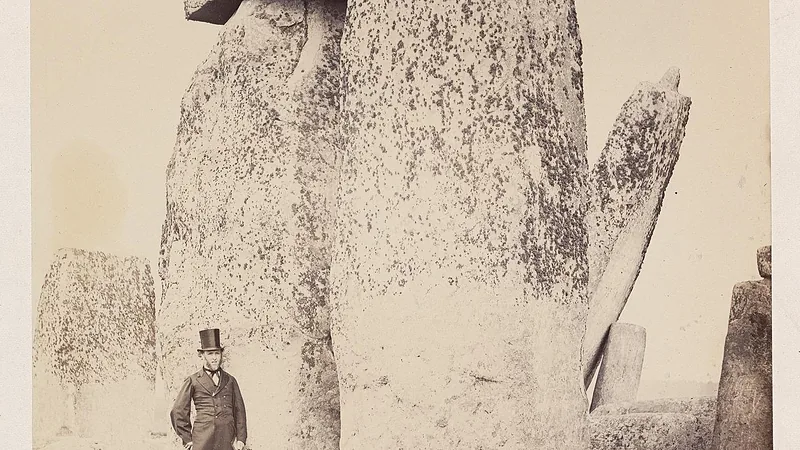
Stonehenge, Trilithon (On the left of altar stone) title QS:P1476,en:'Stonehenge, Trilithon (On the left of altar stone) ' label QS:Len,'Stonehenge, Trilithon (On the left of altar stone) '
Stonehenge, Trilithon (On the left of altar stone) title QS:P1476,en:'Stonehenge, Trilithon (On the left of altar stone) ' label QS:Len,'Stonehenge, Trilithon (On the left of altar stone) ' James Waterhouse

A new study has challenged the theory that Stonehenge’s Altar Stone originated in north-east Scotland, leaving the long-running mystery over the artefact’s source unresolved.

The stone had been thought to have come from the north-east of Scotland. However, findings from the new study dispute that explanation and suggest the previous theory cannot be accepted as settled.

The Altar Stone is part of Stonehenge, one of Britain’s best-known prehistoric monuments. The question of where it came from is significant because its origins could provide further insight into the movement of materials and the construction of the site.

Advertisement

The available findings do not establish a replacement origin for the stone. Instead, they overturn the north-east Scotland theory while the wider mystery remains under investigation.


BritainPost AI Editorial

This article was independently processed and written by BritainPost using verified source material.

Source information For information about source material, attribution, or privacy, please review our Privacy Policy or contact us .
Article link copied.